Game studios handle real car names one of two ways: they pay for a licence and show the real marque, or they invent a fictional manufacturer and put that badge on a body shaped like the car you already recognise. Logos, model names and vehicle designs are all protected, and a real licence is expensive, time-limited and full of restrictions. That single choice explains most of the car names you see in games.
It also explains why a Lamborghini-looking supercar in an open-world game is called something like Peggasi, while the same shape in a racing simulator still wears its real badge. Both are legal. They are just built two different ways, and once you know which one a studio used, every weird name in the roster makes sense.
Updated for 2026.
Table of Contents
- 1What Does It Mean When a Real Car Is Renamed in a Video Game?
- 2Renaming, rebadging and the fictional marque are three different things
- 3How Real Cars Get Renamed in Video Games
- 4How Real Cars Get Renamed in Video Games Across Platforms
- 5Why Developers Change or Remove Real-Car Names
- 6Why renaming matters when the shape is already protected
- 7What GTA VI tells us about fictional brands
- 8Common Examples of Real and Fictional Vehicle Names
- 9What Vehicle Renaming Means for Modders
- 10Frequently Asked Questions
- 11Why does the same real car have a different name in different video games?
- 12Can a game use a real car model name without the manufacturer’s permission?
- 13Are video game car names copyrighted?
- 14Why do developers shorten real car names inside racing and open-world games?
- 15What is the difference between a vehicle model name and an internal mod filename?
- 16Does changing a vehicle name in a mod affect how the car drives?
- 17Conclusion
What Does It Mean When a Real Car Is Renamed in a Video Game?
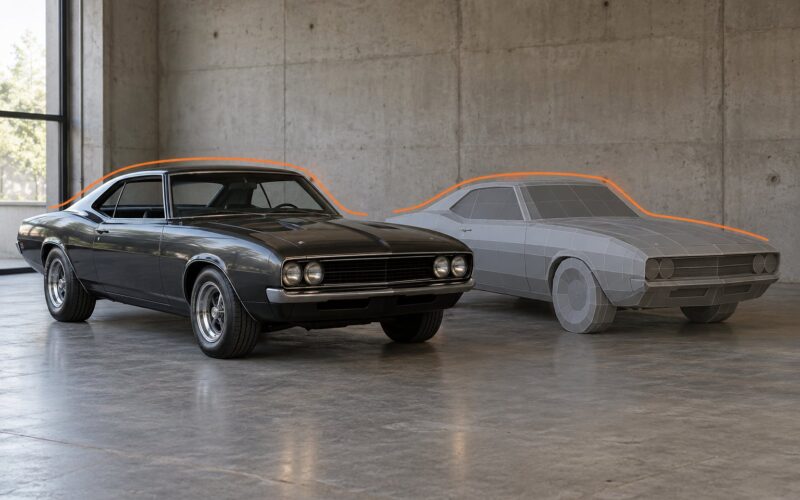
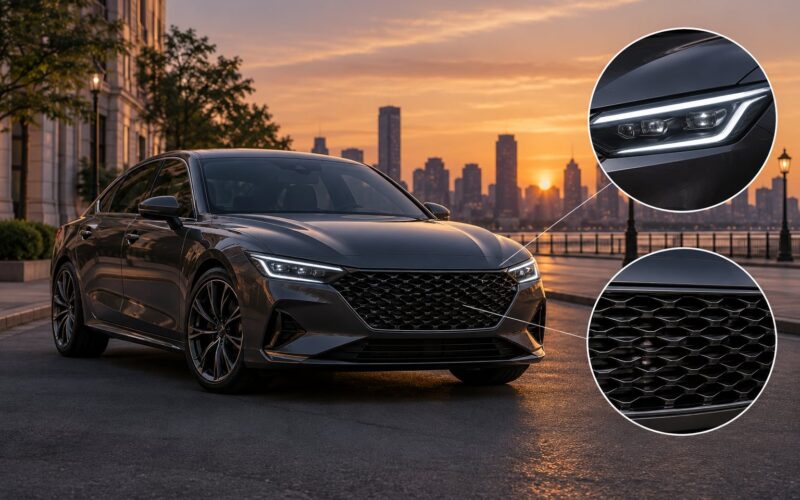
Renaming means the car’s identifying words have been replaced while the vehicle itself stays recognisable. The body proportions, the grille shape and the general silhouette survive. What goes away is the name, the badge and the model designation.
Before a car ever reaches a screen, it carries several different names at once, and it helps to keep them apart:
- Legal name — the name a company can legally trade on. It is registered, defended in court and often the most expensive asset on the car.
- Manufacturer name — the marque: the maker’s corporate identity, used across its whole range.
- Model name — the specific car within the range, usually a marketing word such as a model code or an invented term.
- Internal development name — a project codename used before the car is announced. It rarely reaches players.
- Regional market name — the same car often carries a different name in different countries, sometimes with different engines.
- Fictional replacement — the invented marque a studio uses in place of the real one.
When a player says a car got renamed, they are almost always describing the last item on that list replacing the first three. The silhouette survives; the identity does not.
Renaming, rebadging and the fictional marque are three different things
Renaming swaps the name only. Rebadging swaps the badge on an existing platform — one company putting its own mark on a car it built, a real and common practice in the motor industry. A fictional marque goes further: it invents a whole brand identity, badge, model line and sometimes a company backstory, then attaches it to a vehicle inspired by a real car.
The distinction matters because the legal exposure differs. A rebadge has permission attached, because the same company owns both sides. A fictional marque is a deliberate attempt to reference a real car without using the parts that are legally owned: the name, the logo and the protected shape.
How Real Cars Get Renamed in Video Games
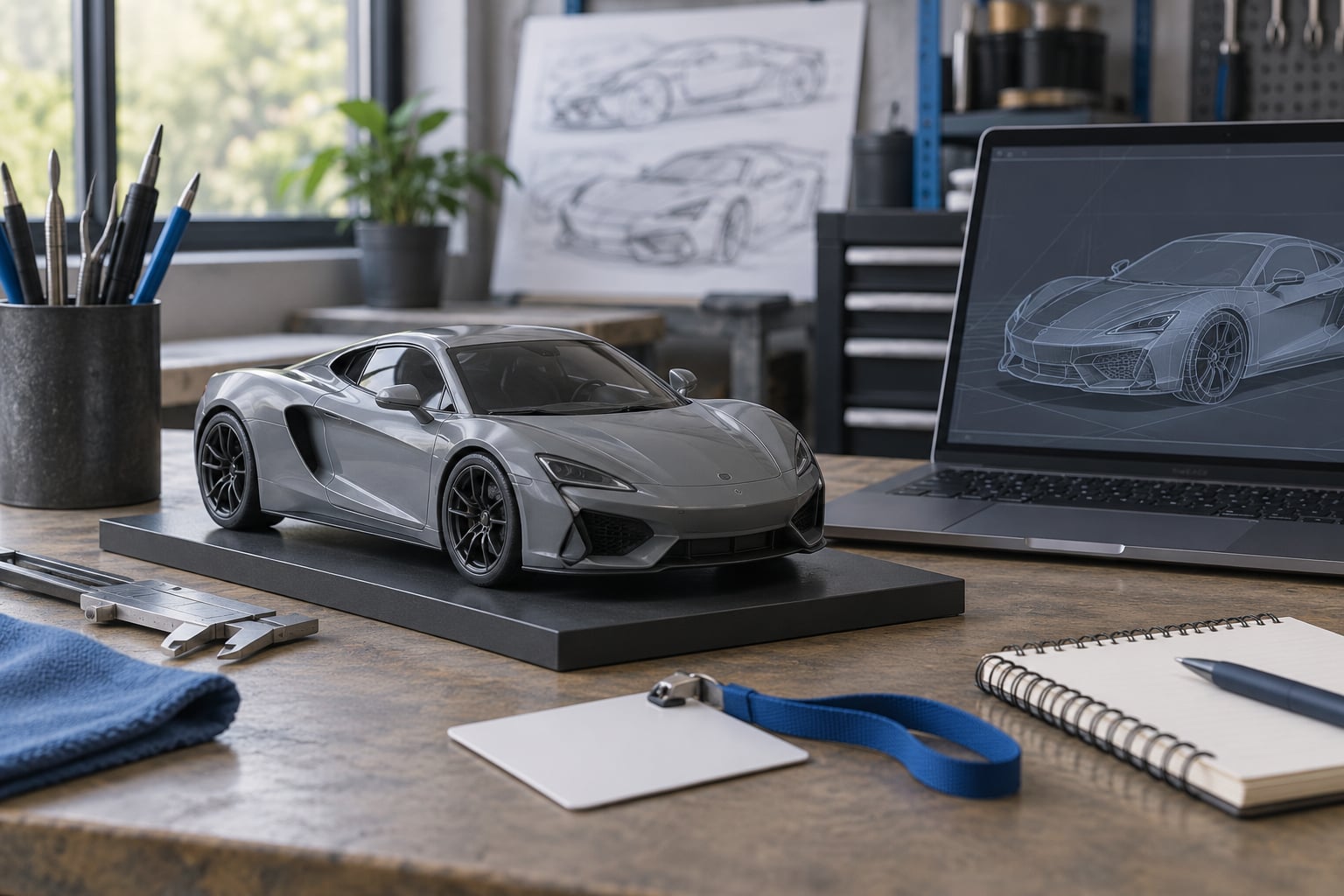
Understanding how real cars get renamed in video games means following a car through a pipeline that starts with a reference photo and ends with a badge on a storefront. The name changes at several points, and each change has a decision maker behind it.
| Stage | Who decides | How the name can change |
|---|---|---|
| Vehicle design brief | Lead vehicle designer | Real car chosen as the visual target, name not yet discussed |
| Legal feasibility check | Business affairs or external counsel | Licence refused or too costly, so the real marque is dropped |
| Internal codename | Development team | Working name that names nothing recognisable, never shown to players |
| Brand approval | Manufacturer, if a licence exists | Trim names, colours and liveries edited to match contract terms |
| Fictional identity build | Naming and art direction | Invented marque, invented model line, invented badge |
| Localisation | Regional publishing teams | Names trimmed, translated or swapped where a pun or reference does not travel |
| In-game display | UI and dealership art pass | Long name shortened for menus, car lists and HUD labels |
Two things stand out. The legal check happens early, before anyone spends time on a badge, and once a marque is licensed the manufacturer usually gets approval rights over how the car is presented. That approval step is the part players never see, and it is one of the biggest reasons a licensed roster can look more conservative than a fictional one.
How Real Cars Get Renamed in Video Games Across Platforms
The same in-game car can carry different names on PC, console, handheld and mobile builds, and sometimes different regions on the same build. Regional releases account for a lot of it: a model tuned for one market may be sold under a different name elsewhere, and publishers localise to match.
Technical limits play their part too. A handheld build may have a shorter user interface string allowance than a PC release, so a long model name gets cut back. Older mobile titles strip names further because of screen space and translation budgets. Add platform policies and memory budgets into the mix, and you get variants of one car carrying three different labels depending on where you bought it.
Why Developers Change or Remove Real-Car Names
Trademark protection is the reason most players hear first. A marque name and its badge are protected marks. Printing them in a commercial game without permission, in a way that suggests the company approved the product, is the classic problem a licence solves.
Vehicle shape is a separate layer. Designs can be protected as registered designs in many jurisdictions, which covers the look of a body and its surface decoration. Copyright also reaches 3D models, artwork and sound recordings. Right-of-publicity and likeness rules matter less for cars but appear constantly for drivers’ faces and liveries.
Why renaming matters when the shape is already protected
This is the question that comes up most often in player threads, usually framed as: if the silhouette is already protected, why bother changing the name? It is a fair question, and the honest answer has three parts.
First, protection is granted and enforced per element. A design registration, a trademark registration and a copyright claim are separate rights with separate owners and separate remedies. Removing one element does not neutralise the others, but it removes the most obvious and most provable one, and it removes the element a studio has no realistic hope of defending in court.
Second, the shape itself is genuinely contested. Design protection around vehicles is narrow and fact-specific. Courts compare marked differences, and small studios regularly argue that a stylised version of a familiar shape is not the same thing as a copy. That argument is uncertain, and it costs real money to run. A renamed badge means nobody has to run it.
Third, the licence is not only about the name. A real partnership comes with brand guidelines, approval processes, restrictions on how the car can be damaged, sold or modified, and sometimes exclusivity arrangements that block other manufacturers. A fictional marque has none of that overhead, which is why open-world games with enormous rosters can ship so many vehicles.
Cost sits on top of all of this. Licensing fees are negotiated per title, often tied to how prominently the brand appears. Small studios routinely conclude the fee is not worth paying, and the asymmetry is stark: one side has a global legal department protecting a brand built over decades, the other has one game to fund.
Other practical reasons show up too. A manufacturer that does not license may withdraw from a market, or a marque may not exist in the region a game is published in. Cultural sensitivity comes into play when a name reads badly in a translation, and localisation teams catch those late. Some names are shortened purely so they fit a menu without wrapping onto two lines.
What GTA VI tells us about fictional brands
The fictional-marque structure is now so deeply built into how open-world games work that it is unlikely to change. Leaked and community-documented data from the series already lists invented manufacturers alongside the established ones, which suggests the same dual system rather than a switch to real brands.
No publisher has announced a licensing policy for the next entry, so treat confident predictions in either direction with suspicion. The safer reading is that fictional brands continue because they serve gameplay reasons too. An invented marque can be sold at a dealership, tuned, stolen, stored and repaired inside a fictional economy without anyone needing permission.
Common Examples of Real and Fictional Vehicle Names
Public naming conventions fall into a few clear patterns, and knowing them makes new rosters much easier to read before any community wiki confirms it.
- Official full name — the manufacturer name plus model designation, as it appears in a licensed racer. This is the only pattern with a real brand attached to it.
- Shortened in-game label — the same car trimmed to fit a car list or a minimap label, dropping a prefix or a long trim word.
- Regional variant name — a different model name for the same platform sold in another country, which is a real marketing practice that predates games.
- Generic class name — a descriptive label instead of a name at all, used when a studio wants to describe a body style rather than a brand.
- Lightly altered name — a fictional mark close enough to hint at the original, common in parody branding and cheap mobile titles.
- Fully fictional marque — an invented manufacturer with its own badge and model line, which is what most open-world games use.
These are publicly documented naming conventions from studios and fan wikis. They are not claims about any particular development team’s internal discussions.
| Fictional in-game marque | Real-world equivalent |
|---|---|
| Grotti | Ferrari |
| Peggasi | Lamborghini |
| Pfister | Porsche |
| Übermacht | BMW |
| Dinka | Honda |
| Vapid | Ford |
| Karin | Toyota and Subaru |
| Declasse | Chevrolet |
| Ocelot | Jaguar |
| Lampadati | Maserati |
| Progen | McLaren |
| Truffade | Bugatti |
| Albany | Cadillac |
| Canis | Jeep |
| Benefactor | Mercedes-Benz |
Read any one row and the pattern is obvious: invented word, familiar silhouette. Read the whole table and it becomes a decoder ring for an entire roster. Players on community forums use exactly this approach, spotting donors by outline long before any wiki lists them.
What Vehicle Renaming Means for Modders
For anyone installing vehicle mods, the single most useful thing to know is that a car has two names. One is the display name shown in menus, dealership sites and vehicle lists. The other is the internal identifier used by the game to load the model, the textures and the handling data. Changing one does nothing to the other.
That is why renaming a vehicle for display and swapping the underlying model are two completely separate jobs. A display rename touches text entries, a localised string file or a vehicle configuration file. A model swap replaces the model and texture files themselves and repoints the vehicle’s internal identifier at them.
A few habits keep this painless. Work on a copy of the files you intend to change, because vehicle configuration files are shared across every car in the same class and a bad edit can blank out entries you did not touch. Read the mod’s own documentation first, since it usually names both the internal identifier and the class it expects to replace. And keep the original filename and folder structure intact until the mod is confirmed working, because other mods you install later may reference the same identifier.
One boundary worth stating plainly: a personal mod is not the same situation as a commercial product. Stripping badges and names from a model you built yourself for your own use sits in a different legal place from shipping that model in a game, a DLC pack or a marketplace listing. Logos and manufacturer assets are not yours to redistribute, and user-generated platforms have been forced to remove branded vehicle content following takedown requests from the manufacturers involved.
Frequently Asked Questions
Why does the same real car have a different name in different video games?
Because the name comes from the licence, not the car. One studio pays a manufacturer for the rights and uses the real marque, while another invents its own. Region, platform and interface limits add more variation: a name may be shortened for a handheld menu, translated for a market where the pun does not land, or replaced by the regional variant of the same model. The underlying car can be identical while the label differs.
Can a game use a real car model name without the manufacturer’s permission?
Not safely in a commercial release. Using a marque or model name that identifies a real manufacturer, in a way that implies a commercial relationship, is trademark territory and the manufacturer will usually object. Modelling a car in your own words without badges is a different matter, and studios do it constantly. It still carries risk around design protection, so a licence is the reliable route rather than the cheap one.
Are video game car names copyrighted?
Names are usually trademarked rather than copyrighted, and the two protect different things. Copyright covers original expression such as artwork, models and code. Trademark covers names, logos and brand signals that identify a commercial source. Vehicle shape can be protected separately as a registered design. That is why a studio may change a badge and believe it has removed the clearest legal exposure while the shape question stays open.
Why do developers shorten real car names inside racing and open-world games?
Interface space is the practical reason. Car lists, HUD labels and minimap entries have limited room, and a full name plus trim designation wraps onto extra lines or gets clipped on smaller screens. Handheld and mobile builds face the tightest limits, and translations take more characters in some languages. Shortening a name to a model code or a short label keeps the list readable without any legal benefit at all.
What is the difference between a vehicle model name and an internal mod filename?
The model name is the label players see in menus, vehicle lists and dealership screens. The internal identifier is the filename and key the game uses to load the model, textures, sound and handling data. Editing the display name changes nothing about how the car loads. Changing the internal identifier repoints which files the game reads, which is what a replacement model needs, and why it must match what the mod expects.
Does changing a vehicle name in a mod affect how the car drives?
No, not on its own. A name change touches text or a display key, while driving behaviour comes from separate handling data covering mass, grip, downforce, gear ratios and engine output. What can go wrong is a file conflict: vehicle configuration files are often shared across a whole class, so an incorrect edit can reset settings for other cars in that class rather than the one you renamed.
Conclusion
The reason a Lamborghini-shaped supercar in a sandbox game is called something other than Lamborghini comes down to one decision made early: pay for a licence, or build a fictional manufacturer. Both routes are legitimate, and both produce a car that players recognise instantly.
So start by identifying the vehicle itself. Look at the proportions, the grille, the badge position and the tail lamps rather than the name, because the name is the least reliable clue in the whole process. Then separate what you see from what the files use: a display name is text, an internal identifier is a filename, and editing one will never quietly change the other.
Before you touch anything, read the mod documentation for the exact identifier and class it expects, and keep a copy of the original configuration files. A backup costs you nothing and saves an evening of untangling a vehicle list that suddenly has gaps in it.