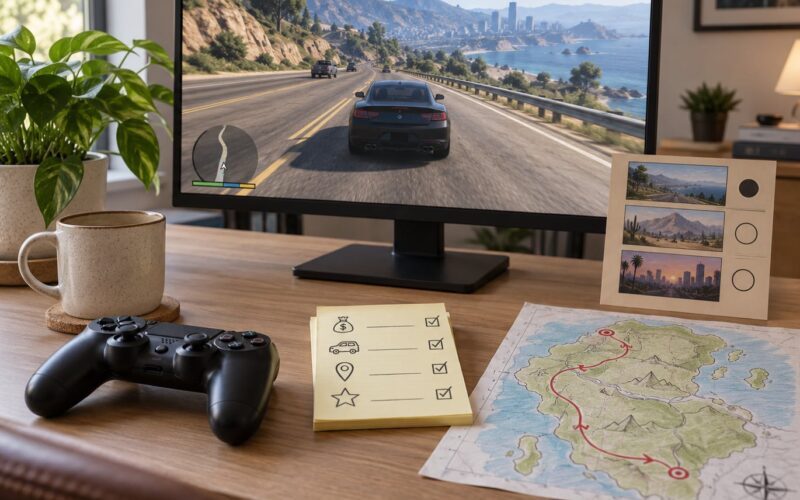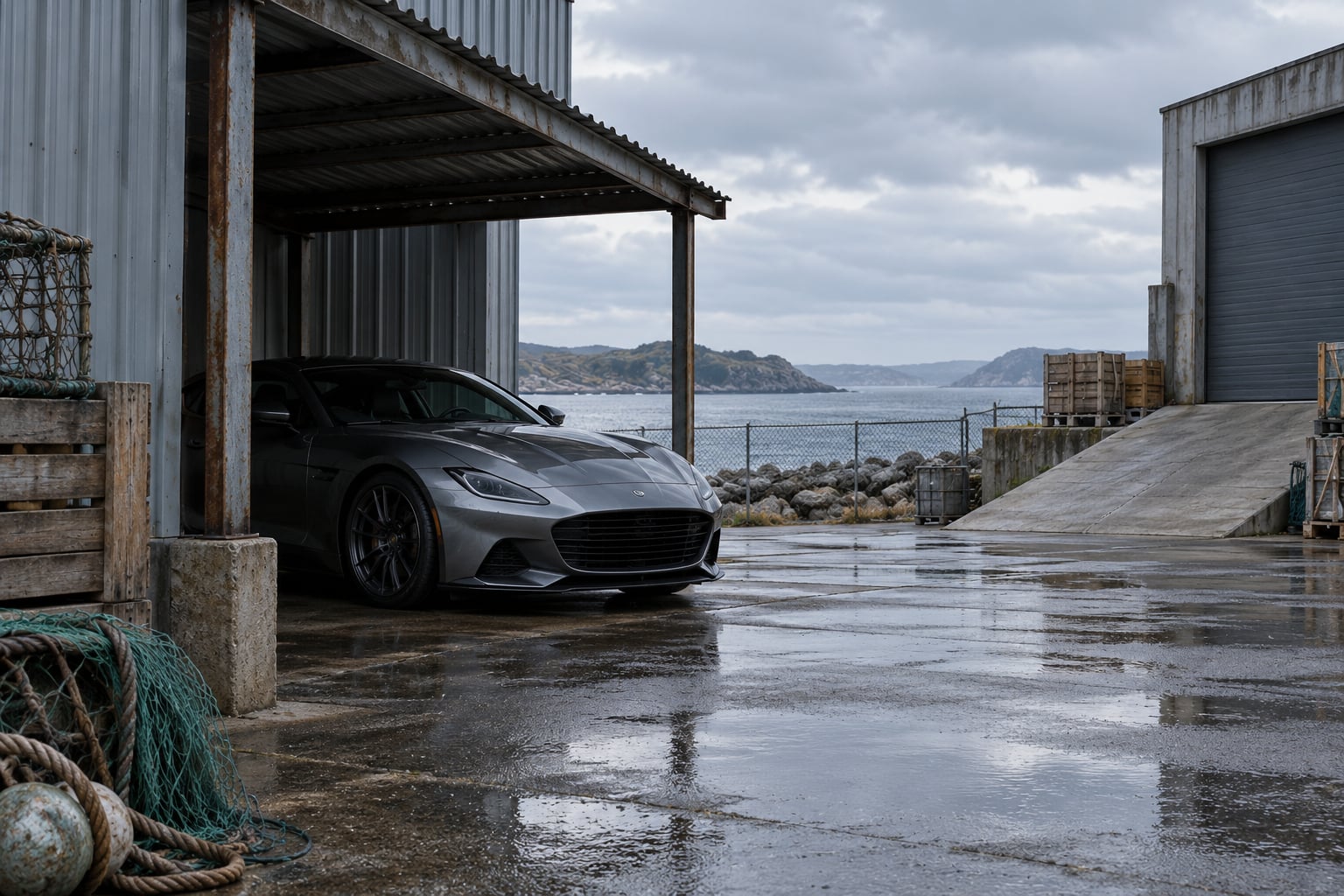
You can find secret vehicles without a guide by learning how they spawn instead of chasing coordinates. Rare cars in GTA V appear because a small set of conditions line up: the right district, the right in-game clock, sometimes the right weather, and a low-probability roll against the ambient traffic pool. Read those rules and you can generate your own locations, spot a genuine find on sight, and confirm it before anyone hands you a map marker.
That matters because most of the lists online are old. One of the long-running pages ranking for this query has barely been touched since 2016, and plenty of videos list vehicles that changed spawn behaviour years ago. A stale location feels like a failure on your part. It usually is not.
Before the method itself, one piece of forum wisdom worth clearing up. There is a popular r/GTAV thread titled simply “Hidden cars,” and most of its replies insist that every vehicle is either on the street or purchasable. That is half right, and the half it misses is the whole subject of this guide.
Table of Contents
- 1What You Need
- 2Step-by-Step
- 3Explore Unfamiliar Roads and Industrial Areas
- 4Look for Vehicles That Do Not Fit Their Location
- 5Test Ramps, Jumps, and Driving Behaviors
- 6Check Buildings, Rooftops, and Underground Spaces
- 7Use Camera and Glitch-Like Clues Carefully
- 8Confirm a Discovery and Save Your Progress
- 9Three Errors That Waste the Most Time
- 10How to Adapt the Method to Other GTA Games
- 11Common Mistakes
- 12Frequently Asked Questions
- 13How do I tell if a rare vehicle is actually a secret vehicle?
- 14Are unusual vehicles always hidden Easter eggs?
- 15Can I find secret vehicles without using a map or waypoint?
- 16Why do some vehicles disappear or move after I leave them?
- 17Does this discovery method work on GTA IV and San Andreas?
- 18How should I explore without getting stuck or losing my progress?
What You Need
You need a save you are willing to experiment in, a mode chosen deliberately, and roughly two hours for the first proper sweep. Nothing else. No apps, no menus, no paid content, and no second screen open with a vehicle list.
Pick the mode first. Story Mode and GTA Online do not share a vehicle pool, and the confusion between them causes more wasted time than anything else in this hobby. Story Mode has the smaller, stranger catalogue of odd vehicles. GTA Online has the wider traffic system plus the vehicles tied to businesses and nightclubs. Decide which one you are hunting in before you start driving.
Have a map available but do not lean on it. The pause menu map lets you set a waypoint on an area you spotted yourself. That is a memory tool, not a source. Set the marker after the find, not before.
Save before you touch anything suspicious. Manual saves in Story Mode and free roam in Online both let you back out of a bad outcome. One wreck in a river and twenty minutes of searching is a bad trade.
Give the search a shape. Unbounded wandering across a huge map produces almost nothing. A district, a condition, a time limit produces results. That shape is what the steps below build.
Step-by-Step
Explore Unfamiliar Roads and Industrial Areas
Start in the places traffic rarely fills: docks, quarries, construction sites, industrial yards, closed barns, private driveways, hillside roads and the access roads behind gated compounds. Ordinary spawn logic favours populated streets, so the volume of ambient cars drops sharply the moment you leave a main road. Low traffic density is the single condition that makes an unusual car visible.
Drive slowly and look at parking angles, not just at the cars themselves. Vehicles parked nose-out at a barrier, lined up beside a workshop door, or sitting in a cluster of two or three identical models in a district where that model does not belong are worth stopping for. A hangar door that is open when the rest of the structure is sealed is worth a walk.
Then vary the approach. The same industrial block on foot, on a bike, and from a hillside above it each reveal different angles. Most finds I have made by accident came from switching the approach rather than switching the district.
Look for Vehicles That Do Not Fit Their Location
A context mismatch is your cheapest detector. A two-door supercar parked in a low-income neighbourhood is worth a closer look. So is a stripped rally car idling in a residential driveway, a compact truck bed filled with something that does not belong in a truck bed, or a motorcycle sitting inside a building rather than on a kerb.
There is a second class of mismatch: vehicles positioned for launching rather than parking. A car angled at a gap in a barrier, a truck facing a drop with its suspension already compressed, or anything sitting at the mouth of a ramp is there for a reason. Ordinary parked cars get parked. Stunt-set cars get pointed at a jump.
The self-finding shortcut: when a vehicle looks wrong, note the time of day, the weather and the district in your phone’s notes app in three words. Something like “docks, overcast, 14:00”. You are not labelling it as a find. You are recording a condition so you can retest it later, which is exactly what nobody tells you to do when a guide says a location and stops.
Test Ramps, Jumps, and Driving Behaviors
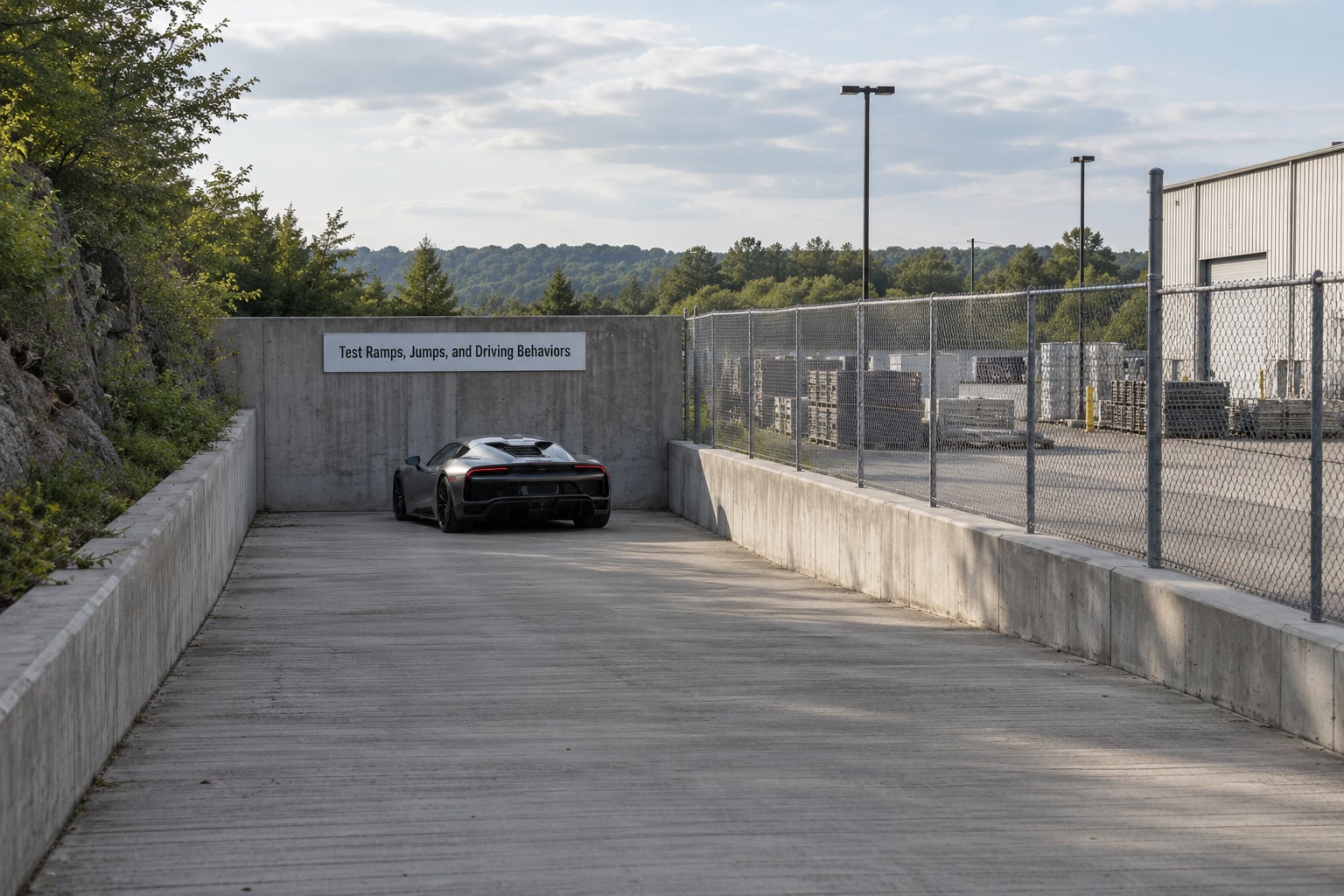
You can confirm a suspicious vehicle by testing it. Pull it out and check three things in order: does it accelerate differently from the standard version, does it handle oddly on the first corner, and does it have equipment or livery that the base model never had. A modified frame, a roll cage, a stripped interior or a bespoke paint job all point to a purpose-built variant rather than a random traffic car.
Where a stunt course exists, drive it. Hit the ramp with control and the vehicle tells you what it is: an unusual landing angle, a suspension travel that should not be there, or a burst of speed that never comes from a road car. If the car survives a landing the same model beside it could not, that is a data point, not a coincidence.
Test somewhere with room to stop, and remember that you can wreck a rare car in a way you cannot un-wreck. If a jump ends near water, do it at a crawl first. I lost a good hour to a ditch after what was otherwise a perfect method run, and the lesson cost more than the find would have been worth.
Check Buildings, Rooftops, and Underground Spaces
Vehicle spawning also respects the inside of structures, so interiors are where you find things that are impossible to see from the street. Barns, private garages, warehouses, multi-storey car parks, rooftop lots, storm drains, tunnels, sewers and drainage channels all get checked in this method. Islands and offshore structures are worth a dedicated trip because nothing spawns nearby to distract you.
Keep one line between a find and a fake. A vehicle in a garage with an interaction prompt, a vehicle that stays put when you leave and return, and a vehicle with a workshop attached are all real. A vehicle in a room you cannot enter, a vehicle clipping through geometry, and scenery visible only from a certain angle are not. If you cannot reach the driver door, it is scenery. That rule alone kills a lot of wasted afternoons.
Use Camera and Glitch-Like Clues Carefully
Photo mode and free camera help you inspect without touching. Zoom in on a suspicious car from across a fence, walk a vehicle into position so you can see its whole side, or frame a doorway to check whether anything sits behind it. These are safe observation moves and they settle a surprising number of arguments with yourself.
What does not work is treating visual glitches as evidence. A floating car, a car that clips through a barrier, or an opening that leads nowhere are ordinary engine artefacts at this scale. Checking an in-game entrance by driving through it is a different activity with different risks and it has nothing to do with spotting a rare vehicle. Use the camera to look, not to cheat your way in.
One genuinely useful camera habit: take a screenshot the moment something feels odd. Later, when you retest the condition, the shot tells you the time, the weather and the exact angle you were at without you having to remember any of it.
Confirm a Discovery and Save Your Progress
Run a five-point confirmation before you claim a find. One, the vehicle responds to interaction and can be taken. Two, its spec sheet shows something the base model does not, whether that is top speed, a different class or installed equipment. Three, it behaves differently in a corner or over a crest. Four, it stays in place when you leave and come back. Five, the location is repeatable, meaning the condition you recorded returns a vehicle in the same state when you retest it.
Three or more of those five is a genuine find, and five out of five is something you can safely log in a personal collection list. Two or fewer and you probably grabbed a rare but ordinary traffic car, which still happens and is not a disappointment.
Store it before you test anything else. In Story Mode, a garage slot keeps it safely through any mission. In Online, a personal vehicle avoids the vehicle being sold or lost after a robbery. In both cases, take one screenshot of the spec sheet while you have it, because that is the evidence you will want months later.
Three Errors That Waste the Most Time
The most common error is treating rarity as proof. A weathered sedan on a farm road is uncommon, not secret. It spawned from the same ambient pool as every other car and will reappear elsewhere tomorrow. A vehicle with a different spec, a custom setup or a fixed location is a different category entirely.
The second error is searching only main roads. If your last ten minutes were spent on a highway, your odds were near zero by design, because ambient traffic favours busy routes and produces the same vehicles everyone else already has.
The third is treating a fixed location as a guarantee. Some vehicles move, some were relocated by updates, and some only appear while a mission condition is active. Check your note on the date you recorded it before you assume the world changed.
How to Adapt the Method to Other GTA Games
The same logic works elsewhere with different vocabulary. GTA IV has a smaller city and fewer vehicle classes, so the method leans entirely on district and time of day, with less interior space to search. San Andreas has three distinct cities plus rural areas, and its vehicle pool changes sharply between urban and desert zones, so the district rule carries more weight there than anywhere else. Vice City Stories and the handheld-era titles use a smaller top-down camera, which makes visual inspection harder and pushes you toward checking the map for a blip after the fact rather than during.
Controls differ enough that you will want to re-learn the camera and the interaction prompts before trusting yourself with confirmation. The verification habit survives every port: reach the vehicle, read the spec sheet, drive it, return to it, confirm it repeats.
Common Mistakes
Assuming every rare car is a secret. Fix: run the five-point confirmation. Spec differences and repeatability separate a real find from an unlucky traffic roll.
Staying on the main roads. Fix: spend the whole session off-road. Docks, yards, quarries, barns and private drives are where density drops and visibility rises.
Following the minimap rigidly. Fix: use the map to record what you saw, not to plan what to see. A waypoint placed before the find removes the only part of the process that teaches you anything.
Confusing random spawns with fixed vehicles. Fix: return to the spot on a different day and a different time. If it is empty, it was ambient traffic.
Ignoring platform differences. Fix: note whether you play on PS5, PS4, Xbox or PC. Traffic pools, event timing and a few spawn behaviours differ between versions, so a note from one platform is not evidence on another.
Not protecting the save. Fix: manual save before every test, and store the vehicle the moment you are convinced. Storage also frees up the spawn you just used, which is worth knowing.
Two habits widen the results. First, rotate conditions instead of repeating them: if the overcast afternoon in the docks gave you nothing, try the same docks at night in clear weather, because you are testing a variable, not retrying a failure.
Second, write down your conditions in a consistent shorthand, three words per sighting. A year of that log is a personal spawn database that nobody can update incorrectly for you, and it is the closest thing to a guide that stays correct after every patch.
Frequently Asked Questions
How do I tell if a rare vehicle is actually a secret vehicle?
Check four things: the spec sheet differs from the base model, the handling or equipment differs, it stays in place when you leave and return, and the condition repeats on a later visit. A car that is merely uncommon still behaves like its standard version and reappears in traffic elsewhere. If three or more of those checks pass, treat it as a real find.
Are unusual vehicles always hidden Easter eggs?
No. Most of them are ambient traffic variants that rolled a low-probability result in a quiet district. That is why an odd car turns up in a car park one evening and is nowhere near that spot the next week. A true hidden vehicle is tied to a fixed place, a specific time window or a mission condition, which is what separates it from an ordinary rare spawn.
Can I find secret vehicles without using a map or waypoint?
Entirely. The method relies on observation, district selection and recorded conditions, so no coordinates are involved at any point. The map is optional and only useful for filing away a location you already spotted yourself. If you set a waypoint before looking, you are reading a guide by another name.
Why do some vehicles disappear or move after I leave them?
Most vehicles you find are ambient traffic, and ambient traffic despawns when you move far enough away or the area reloads, then respawns elsewhere. Genuine fixed vehicles stay where they are. If a car vanishes after you drive off, that is a strong hint it was never a fixed find, so note the conditions and come back to test it.
Does this discovery method work on GTA IV and San Andreas?
The principles transfer, but the results do not. San Andreas rewards district variation most, with very different vehicle pools in the city, the countryside and the desert. GTA IV has a tighter map and fewer classes, so time of day carries more of the work. Both need a re-learn of the camera and interaction prompts before you trust your own confirmation checks.
How should I explore without getting stuck or losing my progress?
Save manually before every test and store anything rare the moment you are convinced of it. Test jumps at a crawl near open ground rather than at speed over a drop, and if a vehicle ends up in water or a ditch, reload rather than fight it. Record the time, weather and district for each sighting so you can reproduce the condition instead of hunting blind again.
Start with one district you have never driven properly, pick a condition such as late night in clear weather, and stay off the main roads for an hour. Write down anything odd you see, even the ones that turned out to be nothing. That log is what turns the next hour from a search into a test, and it is how you find secret vehicles without a guide for good.