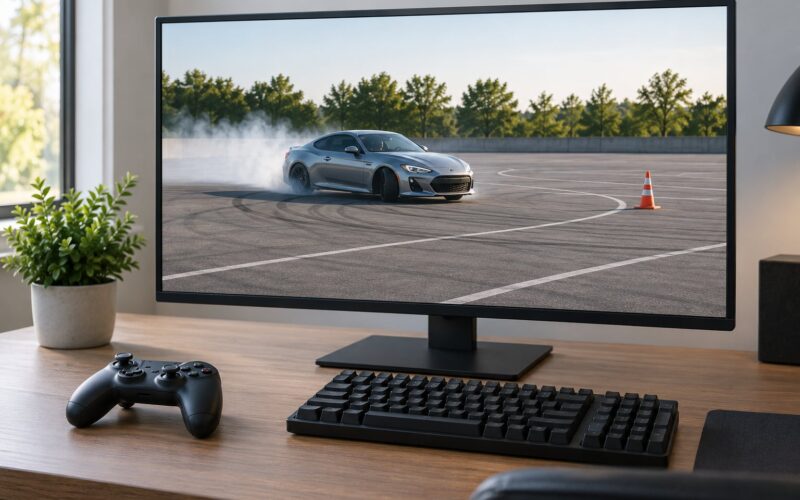
Corner faster in arcade driving games by doing one thing most players never do: brake in a straight line, then turn. Your front tires have a fixed grip budget, and braking while steering spends it twice, so the nose pushes wide and you lose the corner. Set up the turn before it starts, hit the apex, and feed the throttle back in on exit. Expect a couple of weeks of practice, not an afternoon.
The rest of this guide breaks that idea into five steps, then shows you how to spot the mistake you are making. The advice works on a pad, on a keyboard, and on a wheel, though a controller with analog triggers makes step four much easier.
Table of Contents
- 1What You Need
- 2Step-by-Step: Cornering Faster in Arcade Racing Games
- 3Look through the corner before you turn
- 4Brake before the bend, not during it
- 5Use a racing line that fits the game
- 6Balance steering and throttle to corner faster
- 7Drive the exit to gain time
- 8Common Mistakes
- 9Frequently Asked Questions
- 10Should you brake while cornering?
- 11What speed should you take a corner at?
- 12What is the apex cornering method and how does it work?
- 13Is drifting the fastest way around a corner?
- 14Do I need a wheel to corner fast, or is a controller enough?
- 15Is front-wheel drive or rear-wheel drive better at cornering?
- 16Conclusion
What You Need
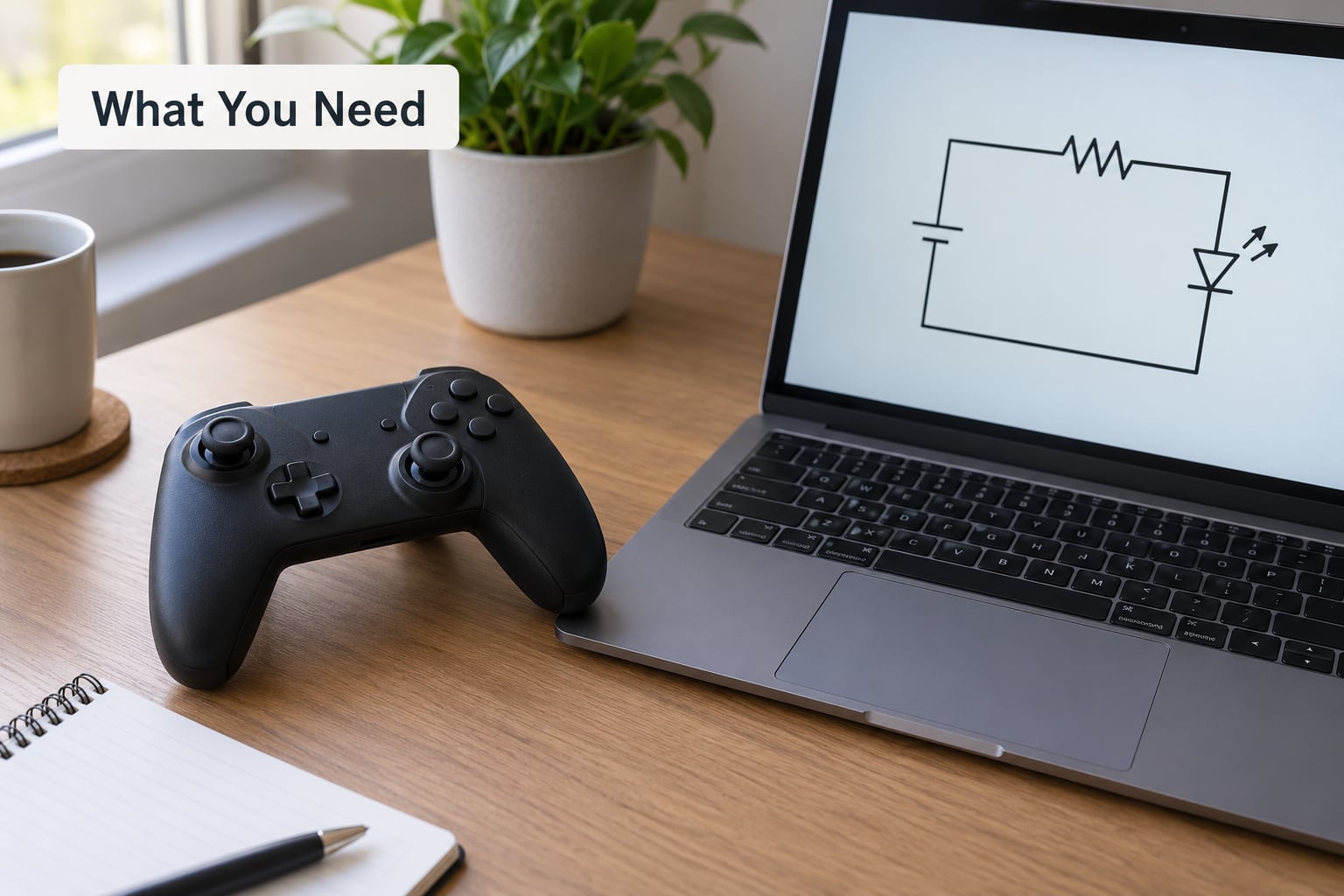
You need very little. A car you have driven for at least an hour, one corner you can reach within a minute of spawning, and roughly 20 minutes of quiet time. That is the whole kit.
Pick one track and one car and stay there for your first sessions. Switching cars every run is the fastest way to stay slow, because the maximum corner speed is a property of the car, not a number printed in a guide. A lightweight car will take a hairpin at a speed that makes a heavy car understeer straight off the road.
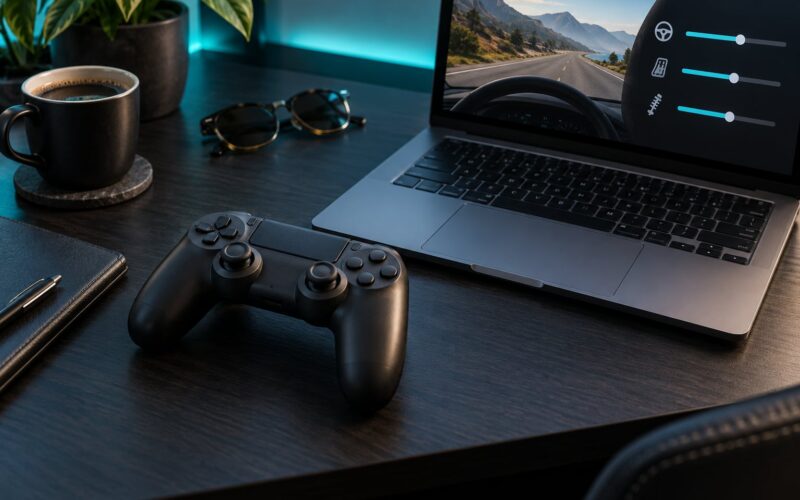
Check your assists once before you start. Turn traction control and stability control to medium rather than maximum, and leave ABS on until you can brake in a straight line without locking up. Full assists hide exactly the inputs you are trying to learn.
If you are on keyboard, expect slower progress. Digital steering gives you on or off, not a gradual angle, so the smooth progressive inputs described below take real practice. Analog triggers matter more than analog steering, and a pad with triggers is a genuine upgrade over a d-pad.
Step-by-Step: Cornering Faster in Arcade Racing Games
Look through the corner before you turn
Look at where you want to exit, not at what is closest to your bumper. Players who steer based on the nearest edge of the track turn in early, run out of road, and then blame the car.
Scan three things in order: the corner entry, the apex, and the next corner beyond it. That third glance is what stops you from arriving at the next braking point too fast, and it is also what lets you pick a wider entry on the corner you are in right now.
How to tell it worked: your hands stay relatively still through the corner. If you are sawing at the wheel back and forth, you are correcting a line you chose too late, not fixing a grip problem.
Brake before the bend, not during it
Straight-line braking is faster than corner braking because the car is pointed where it is going. Start braking at a fixed marker, hold the brake until you reach the speed you want at turn-in, and be fully off the brakes as you turn the wheel.
The handoff is the part that matters. As your steering input comes up, your brake pressure comes down, ideally overlapping for a moment. That overlap is trail braking, and it lets you carry a little more entry speed without the front washing out completely.
Online advice contradicts itself on this. Players insist you should never brake while cornering, and other players say trail brake everything. Both are right, depending on how smooth your hands are. If your steering input is jerky, braking at the same time will spin you every time, so brake earlier and straighter. Once you can turn in smoothly, add brake pressure back past turn-in and lap times fall.
How to tell it worked: the car turns in the moment you steer. If there is a long push or a slide before the nose comes around, you braked too late or too hard.
Use a racing line that fits the game
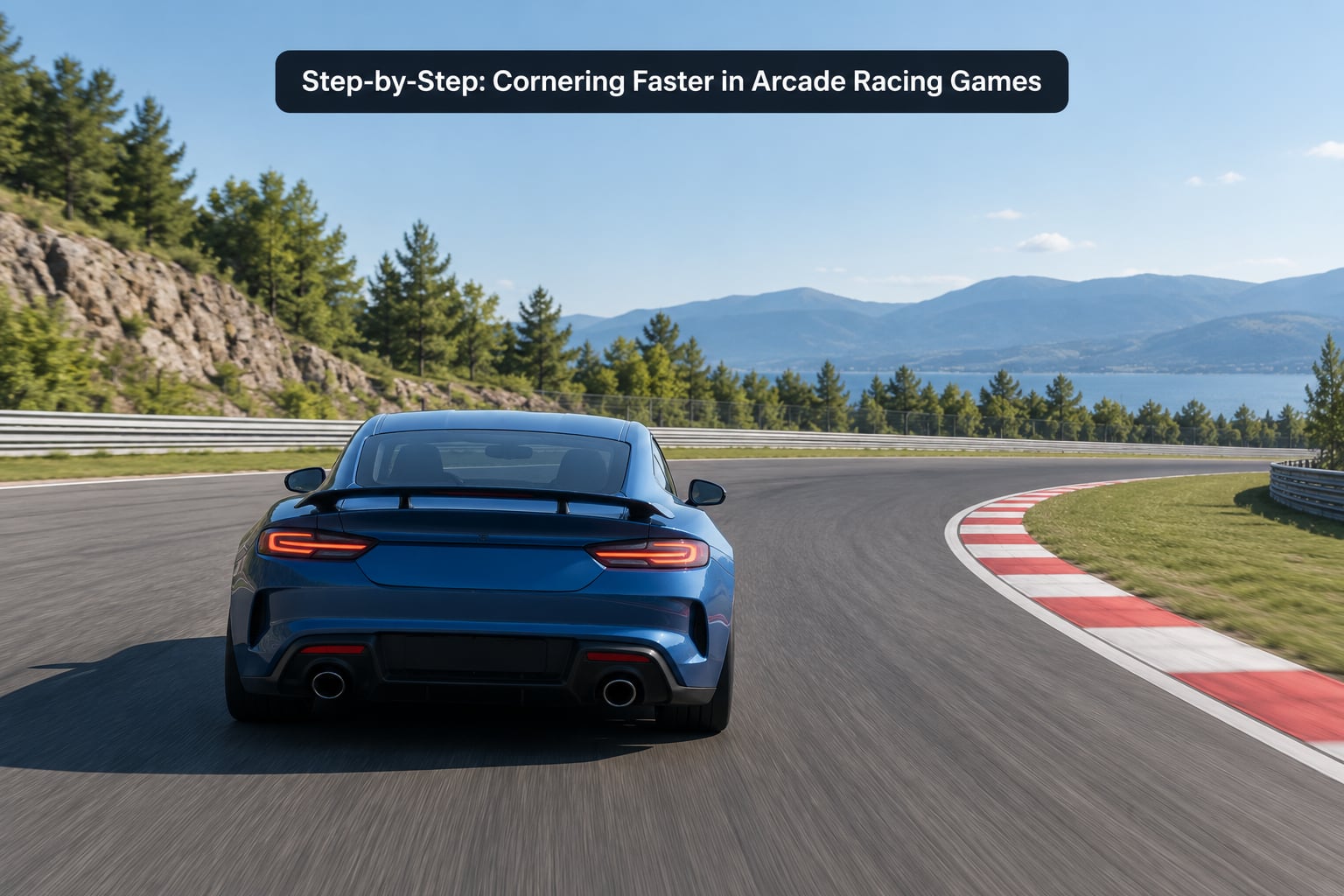
The classic line is wide entry, apex, wide exit. Arrive wide, clip the inside at the apex, then drive out toward the far edge so you are pointed down the longest possible straight. Every corner you take this way costs less time than the same corner taken tight-to-tight.
A late apex is the version of that line worth learning. Instead of turning in early and hugging the inside, stay wide, hit the apex as late as you can, and use the extra room on exit. That matters most on long sweepers where an early apex leaves you pointing into the scenery.
Not every corner takes the same line. Tight hairpins usually work best with a late apex and full commitment on exit, because the exit is a long straight. Fast sweepers reward a slightly earlier turn-in so you can unwind the steering and get back on power sooner.
Use trackside cues as anchors: braking boards, apex curbs, and the track edge itself. Beginners learn one corner to an exact position rather than reacting to it in the moment, and that is faster than trying to judge speed fresh every lap.
How to tell it worked: you finish the corner pointing at the next straight and can go back to full throttle without turning more. If you are still steering hard as you accelerate, your apex was too early.
Balance steering and throttle to corner faster
Less steering input means more speed, which is the opposite of what instinct tells you. A big steering angle at speed uses grip that could have been carrying momentum through the turn, so aim for a smaller angle and hold it longer.
Build the angle gradually rather than snapping to full lock. Understeer, where the car refuses to turn and pushes past the apex, comes from too much entry speed and too much steering. Oversteer, where the rear steps out, comes from too much steering or too much throttle applied while the car is still rotating.
If the car is already sliding, resist the urge to snap the wheel. A brief, small countersteer catches it; a large one usually spins you. Front-wheel-drive cars in arcade games tend to understeer at the limit, while rear-drive cars reward throttle control far more.
How to tell it worked: the steering wheel barely moves through the apex. Lots of movement means you are fighting the car instead of guiding it.
Drive the exit to gain time
The exit is where the next corner’s speed comes from. Straighten the wheel as early as the corner allows, because a car still turning at full throttle uses its grip to fight the steering rather than accelerate.
Add throttle progressively. Dumping full throttle the instant you reach the apex while the car is still rotating is the single most common way players spin out mid-corner. Feed it in, feel the rear settle, then go.
Dropping a gear or two before the apex can help, since you leave the corner in the power band instead of waiting for the car to pull. Veteran arcade players cite this constantly, and it works in nearly every drivetrain.
How to tell it worked: your straight-line speed after the corner is higher than it was before you changed anything. If the lap time does not move, the corner is not the problem.
Common Mistakes
Braking during the turn. The front tires cannot brake and corner at full capacity at once, so the nose runs wide. Fix it by moving the braking point earlier until the whole stop happens in a straight line.
Turning in too early. You arrive at the apex already out of room and the exit is short. Fix it by staying wide on entry and moving the turn-in point a car length or two later.
Adding full throttle at the apex. The rear is still loaded and the car is still turning, so the back steps out. Fix it by feeding throttle in over about a second and only pushing once the wheel is straight.
Countersteering too much. A small correction catches a slide; a large one becomes a spin. Fix it by catching yourself with a shorter, quicker tap rather than holding the wheel over.
Changing camera angle mid-corner. Every switch resets your sense of the corner and usually ends with a trip across the grass. Fix it by picking a camera before the session and leaving it alone.
Practicing without comparing laps. Without a reference, every attempt feels the same and nothing improves. Fix it by driving a ghost lap, a rival lap, or your own best lap, and comparing sector times corner by corner.
Switching car or track every session. You never build a reference for how fast that corner can be taken. Fix it by staying with one car and one track until the times stop moving.
Two habits fix most of these at once. Slow your steering rather than slowing your corner speed, and stay consistent rather than aggressive. Players who reduce steering input usually end up carrying more speed anyway, which is a nice surprise the first time you see it.
Frequently Asked Questions
Should you brake while cornering?
Brake before the corner, not during it. Your front tires have a fixed grip budget, and braking while steering spends it on both at once, which pushes the nose wide. Light trail braking past turn-in works once your steering is smooth, but beginners should get straight-line braking clean first.
What speed should you take a corner at?
The maximum corner speed is a property of your specific car, not a universal number. Test it by increasing entry speed slightly on each lap until the car starts to understeer, then back off by a small margin. That value stays valid for that car on that corner until you change the setup or assists.
What is the apex cornering method and how does it work?
An apex is the tightest point of a corner. The method is to enter wide, touch the inside at the apex, and drive out wide again so you exit pointed down the longest straight. A late apex delays the turn-in slightly, which usually produces a much better exit than turning in early.
Is drifting the fastest way around a corner?
No, not in most arcade races. Grip driving keeps the car pointed where it is going and lets you accelerate sooner out of the corner, so it wins lap times. Drift when the event rewards style or points, or when the corner is too tight to take flat, but not when you are chasing a best lap.
Do I need a wheel to corner fast, or is a controller enough?
A controller is enough. Plenty of fast players use a pad, and analog triggers are the part that matters most for brake and throttle control. A wheel helps with precision but does not replace straight-line braking and a clean line. Learn the technique on whatever you have before changing hardware.
Is front-wheel drive or rear-wheel drive better at cornering?
Neither wins outright. In arcade games, front-wheel drive is usually more forgiving because it resists oversteer, while rear-wheel drive rotates better and rewards throttle control. All-wheel drive sits between them. Pick one, learn its limits, and stay with it long enough to build a reference.
Conclusion
Start with one corner. Pick a single bend you can reach in seconds, move your braking point earlier until the car stops in a straight line, then aim for a late apex and drive out wide. Once the entry is clean, work on feeding the throttle back in as the wheel straightens, and only then chase more entry speed.
That order matters. Players who jump straight to more speed spin the car, blame the setup, and swap to a different car. Get the braking and the line right first, and the extra speed usually shows up on its own.